ENGWE Electric Bikes Review: Are ENGWE E-Bikes Worth It? META_DESCRIPTION: Read our ENGWE Electric Bikes review covering popular models, features, range, pricing, pros, cons, warranty, and who should consider an ENGWE e-bike. FOCUS_KEYPHRASE: ENGWE Electric Bikes review ARTICLE_HTML:
Affiliate Disclosure: This review contains affiliate links. If you purchase through one of these links, we may earn a commission at no extra cost to you.
Quick Verdict
ENGWE is worth considering if you want an electric bike with a wide choice of designs, strong specifications, fat-tire options, commuter-focused models, and practical features. The main trade-off is that ENGWE’s range is broad, so choosing the right model requires more attention to motor type, battery capacity, frame style, weight, and intended use.
ENGWE Electric Bikes Review: What You Need to Know
ENGWE has built its product range around different types of electric riding rather than trying to make one bike fit everyone. Its current EU lineup includes commuter e-bikes, fat-tire bikes, folding models, cargo and utility bikes, motorcycle-style e-bikes, and more specialized designs.
That variety is one of ENGWE’s biggest advantages. Instead of choosing a bike based only on appearance, buyers can select a model around the way they actually plan to ride.
Why Consider ENGWE?
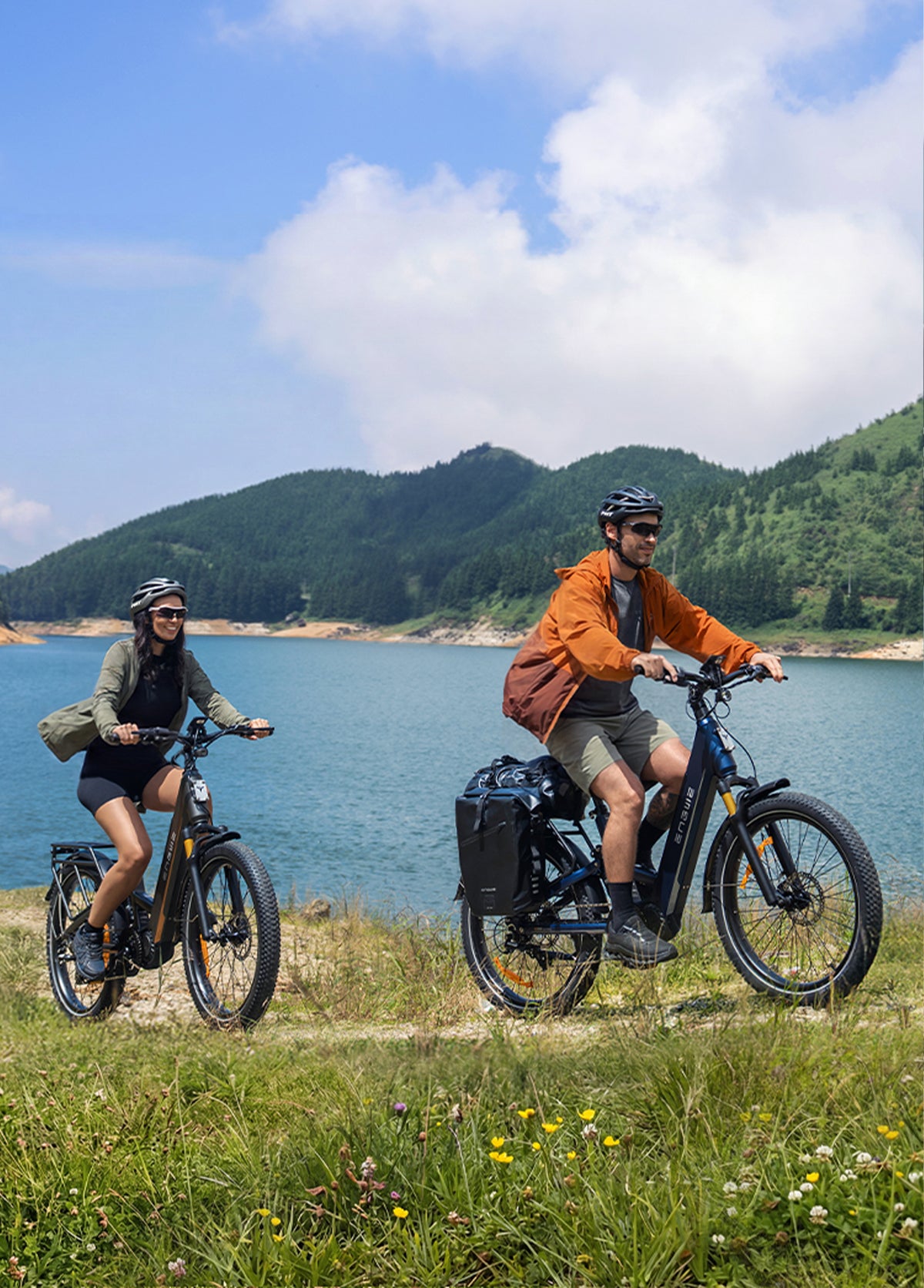
The appeal of ENGWE is not simply that its bikes look different from conventional bicycles. The brand offers several combinations of motor systems, batteries, suspension setups, tire sizes, frame designs, and practical equipment.
Wide Model Range
Options for commuting, recreation, folding, cargo, and mixed terrain.
Strong Specifications
Several models focus heavily on torque, battery capacity, suspension, and range.
Practical Equipment
Many models include useful features such as lights, racks, displays, and integrated accessories.
Different Riding Styles
Step-through, fat-tire, folding, full-suspension, and motorcycle-style designs are available.
Popular ENGWE E-Bike Models
ENGWE’s current range is large, so there is no single model that is automatically best for every buyer. The better approach is to match the bike to your riding environment.
| Model | Best For | Why Consider It |
|---|---|---|
| L20 3.0 Pro | Commuting & comfort | Compact design, full suspension and mid-drive system |
| E26 3.0 Pro | Mixed terrain | Full suspension, high torque and all-road tires |
| ENGWE M20 | Fat-tire recreation | Dual-suspension design and optional dual-battery setup |
| EP-2 Pro | Folding & everyday riding | Folding format with fat tires and commuter-friendly design |
| P275 Series | Urban commuting | More traditional commuter-focused approach |
ENGWE L20 3.0 Pro: A Strong Commuter Choice
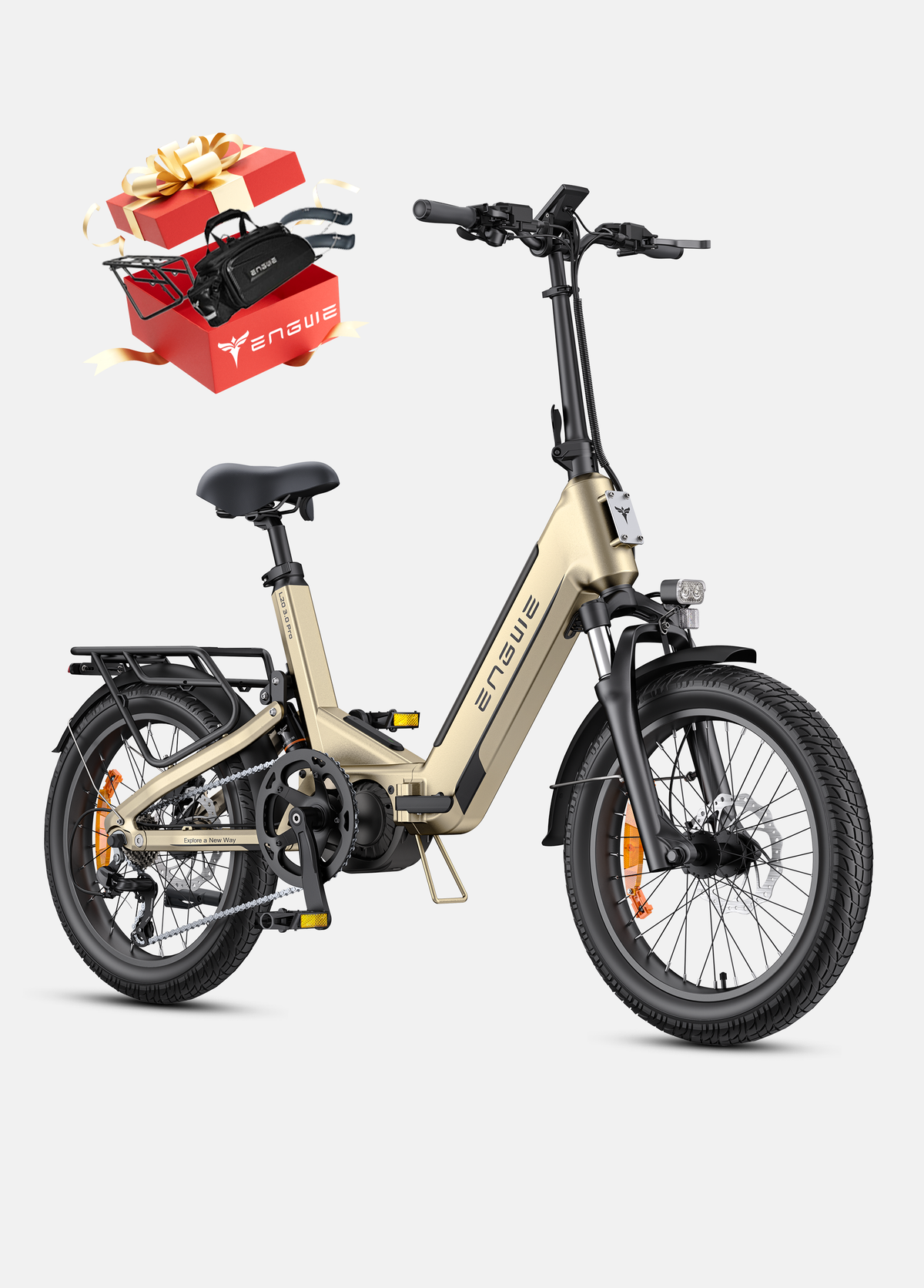
The L20 3.0 Pro is one of the more interesting options for riders who want a comfortable electric bike without moving into an extremely large adventure-bike format.
ENGWE lists a 250W mid-drive motor with 100Nm of torque, a 720Wh removable battery, full suspension, fast charging support, and a maximum claimed range of up to 160 km under its stated conditions.
The important point is not simply the headline range. Real-world range can change considerably depending on rider weight, terrain, temperature, assist level, speed, and riding conditions.
Pros
- Strong mid-drive motor specification
- Full-suspension setup
- Large removable battery
- Comfortable step-through format
- Useful security features on the Pro model
Things to Consider
- Higher-end specifications can increase cost
- Full-suspension bikes are generally heavier
- Published range should not be treated as a guaranteed real-world distance
ENGWE E26 3.0 Pro: Built for Mixed Terrain
If your priorities are comfort, stability, and mixed-terrain capability, the E26 3.0 Pro deserves attention.
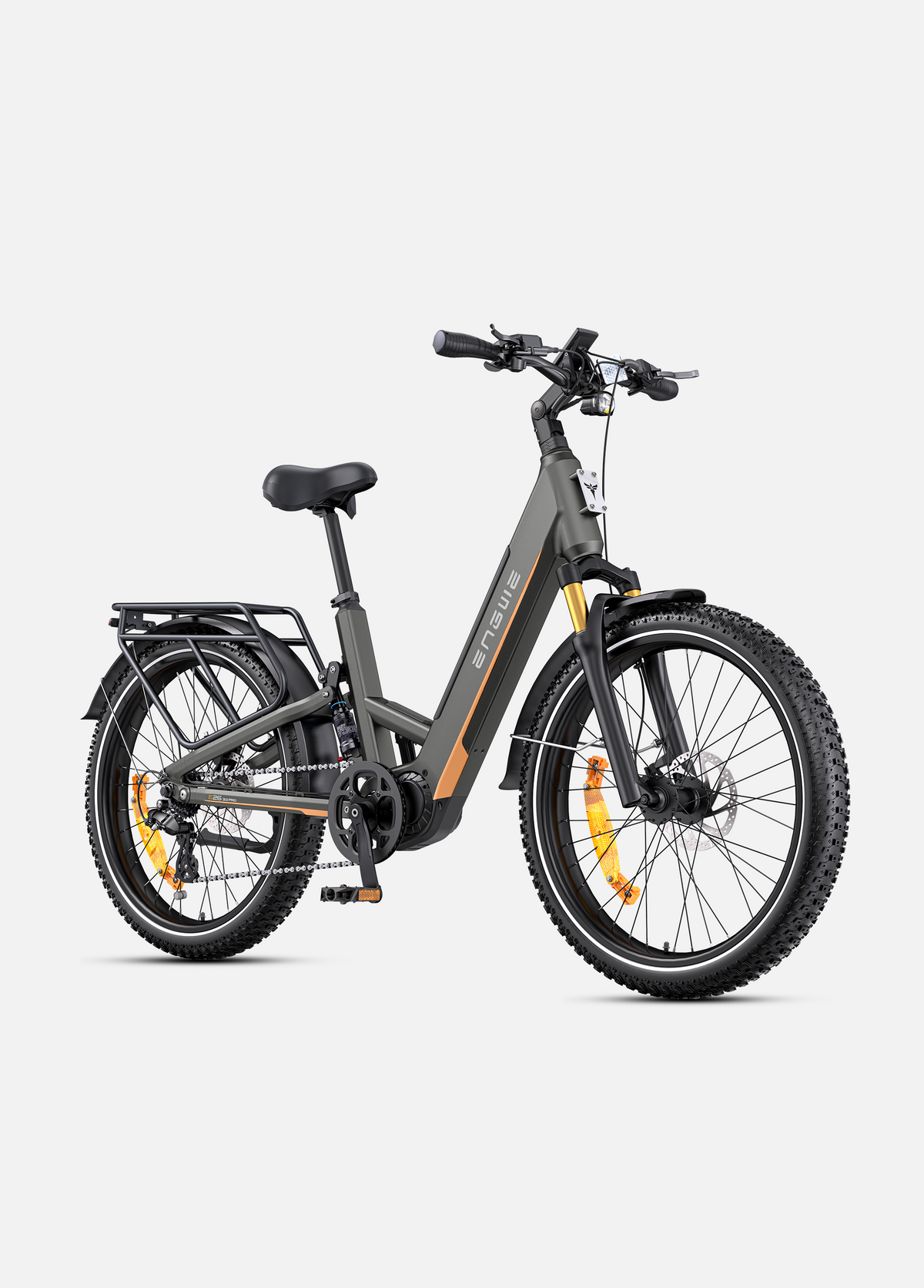
Its current specification includes a 250W mid-drive motor with 100Nm of torque, full suspension, 26 × 3.0-inch all-road tires, hydraulic disc brakes, a 720Wh LG battery, Shimano 8-speed gearing, GPS tracking, and an anti-theft alarm.
ENGWE also lists a maximum payload of 150 kg and a claimed range of up to 135 km. Again, range should be viewed as a manufacturer claim rather than a promise of everyday riding distance.