SEO_TITLE: Kiwi Ears Review: IEMs, Product Range and Which Model to Choose
META_DESCRIPTION: Kiwi Ears review covering its current IEM lineup, Cadenza II, Astral, Orchestra II, driver technologies, accessories, pricing, warranty and how to choose the right model.
FOCUS_KEYPHRASE: Kiwi Ears review
ARTICLE_HTML:
Affiliate Disclosure: This article contains affiliate links. If you purchase through our link, SoftwareChecked may earn a commission at no additional cost to you.
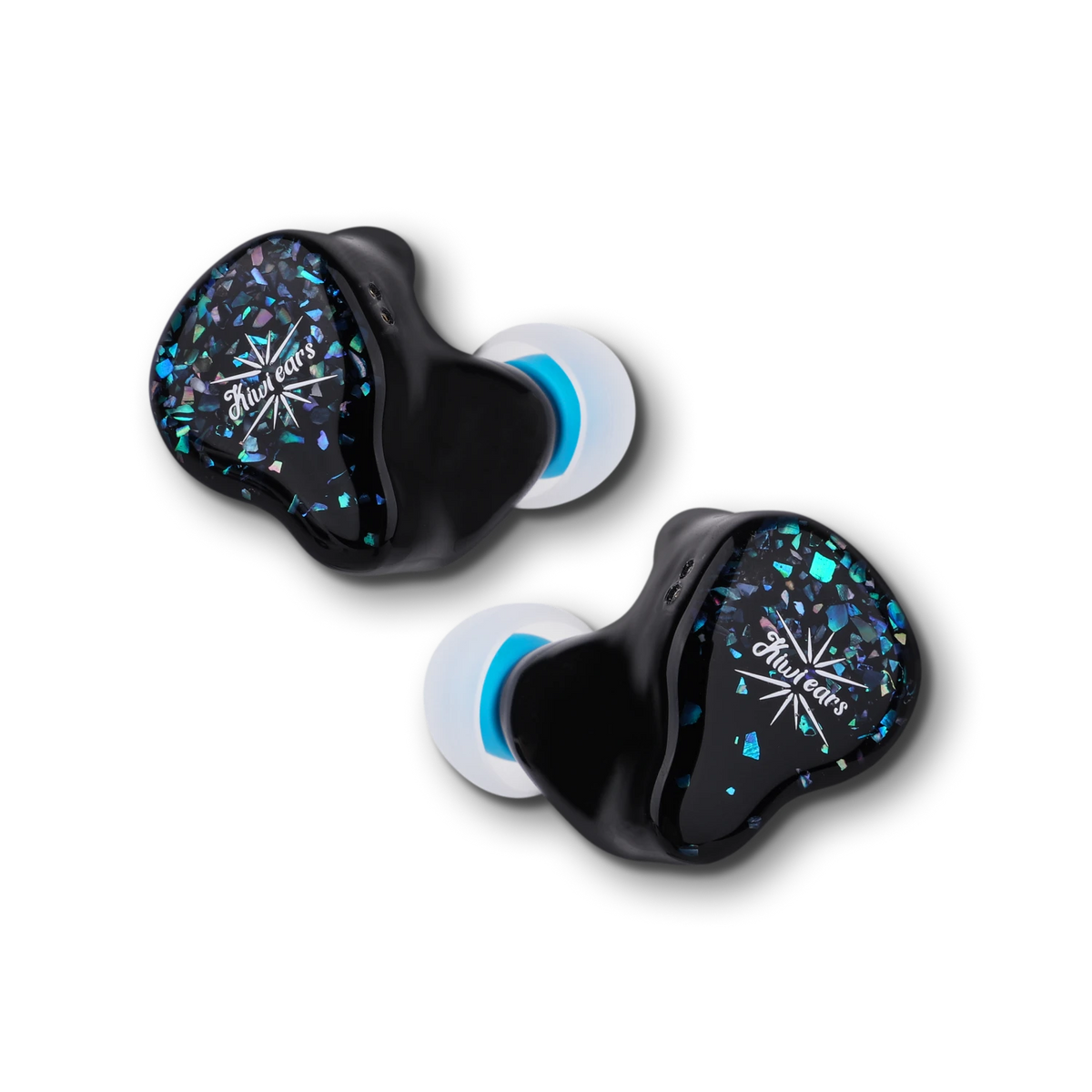
Kiwi Ears Review: Quick Verdict
Kiwi Ears is a specialist audio brand built around in-ear monitors, with a product range that now extends well beyond a few popular IEM models. Its current store is organized around balanced-armature, dynamic-driver, hybrid and planar-driver IEMs, alongside DAC/AMP products and accessories.
That breadth is one of the most interesting things about Kiwi Ears. Instead of forcing every buyer toward the same type of earphone, the brand offers different approaches to wired audio, from the $49.99 Cadenza II to more technically complex models such as the $299 Astral and $349 Orchestra II.
| Category | What to know |
|---|---|
| Best for | Listeners interested in wired IEMs, music, gaming, monitoring and enthusiast audio |
| Main strength | Wide range of IEM designs, driver technologies and price points |
| Main limitation | The large catalog can make model selection confusing for first-time IEM buyers |
| Entry point | Cadenza II at $49.99 |
| Higher-end options | Astral at $299 and Orchestra II at $349 |
| Warranty | 1 year for qualifying IEMs and earphones; cables generally have 3 months |
What Is Kiwi Ears?
Kiwi Ears is an audio company focused primarily on in-ear monitors and related personal-audio equipment. Its current catalog includes traditional dynamic-driver IEMs, balanced-armature designs, hybrid configurations, planar-driver products and more specialized multi-driver monitors.
The company also sells DAC/AMP products and accessories, meaning the Kiwi Ears store is not limited to earphones alone.
This makes the brand interesting for buyers who want to build a wired listening setup rather than simply purchase a single pair of earbuds.
A Look at the Kiwi Ears Product Range
Kiwi Ears has expanded considerably beyond the models that are most commonly mentioned in older reviews.
The current store includes products such as Cadenza II, Orchestra II, Astral, Stardust, Belle, Septet, Étude, Halcyon and several collaboration models. The catalog is also divided by technology, including balanced-armature, dynamic-driver, hybrid and planar-driver IEMs.

| Product / category | Position in the range | What makes it different |
|---|---|---|
| Cadenza II | Entry-level IEM | 10mm titanium-coated dynamic driver with KARS 2.0 |
| Stardust | Hybrid IEM | 1DD + 4BA configuration |
| Astral | Advanced hybrid IEM | 1 dynamic driver + 6 balanced-armature drivers |
| Orchestra II | Reference-style IEM | 10 balanced-armature drivers with four-way crossover |
| Septet | Multi-driver IEM | Seven drivers using four driver types |
| Étude | Specialized IEM | Uses Kiwi Ears’ KVT vibration-transducer technology |
| DAC/AMP | Audio accessories | Digital-to-analog and amplification products for wired setups |
The range is useful because different listeners can approach Kiwi Ears from different directions. A beginner does not have to start with a $300 or $350 IEM, while an experienced listener can explore more complicated driver arrangements.
Kiwi Ears Cadenza II: The Accessible Starting Point
The Cadenza II is currently listed at $49.99 and is one of the easiest Kiwi Ears models to understand from a technical perspective.
It uses a 10mm titanium-coated dynamic driver and Kiwi Ears’ KARS 2.0 acoustic system. The company describes KARS 2.0 as a system designed to shape the low end with an approximately 8dB sub-bass boost that rolls off around 200Hz.
The Cadenza II also uses a detachable 0.78mm 2-pin cable and is offered with different cable options, including a 3.5mm version and a Type-C version with microphone.
Why the Cadenza II Is Interesting
- Its $49.99 price makes it much easier to approach than Kiwi Ears’ higher-end models.
- The single dynamic-driver architecture is relatively straightforward.
- KARS 2.0 gives the design a specific approach to low-frequency tuning.
- The detachable cable makes replacement easier than a permanently attached cable.
- The product includes six pairs of ear tips in different sizes.
The Cadenza II is therefore a logical model to investigate if you are new to IEMs and want to understand what Kiwi Ears offers without immediately moving into the higher-priced part of the range.
Kiwi Ears Stardust and Other Hybrid Designs
The current Kiwi Ears catalog also includes hybrid models such as the Stardust. The product listing describes the Stardust as using a 1DD + 4BA configuration, combining a dynamic driver with four balanced-armature drivers.
This type of product is aimed at listeners who want a more complex driver arrangement without necessarily moving straight to the most expensive models.
Hybrid IEMs are particularly interesting because they divide different parts of the frequency range between different driver technologies. However, the number of drivers should not be treated as a simple quality score. Tuning, crossover design, shell acoustics and fit still influence the final experience.
Kiwi Ears Astral: A More Advanced Hybrid Approach
The Astral is positioned much higher than the Cadenza II. Kiwi Ears currently lists it at $299 and describes it as a seven-driver hybrid design.
The configuration combines one 10mm bioceramic dynamic driver with six balanced-armature drivers. The dynamic driver handles the lower frequencies while the balanced-armature drivers are used for the midrange and higher frequencies.
This makes the Astral more relevant to an experienced IEM buyer who is specifically interested in hybrid driver technology rather than someone simply looking for an inexpensive upgrade from basic earbuds.
Kiwi Ears Orchestra II: A Reference-Oriented Option
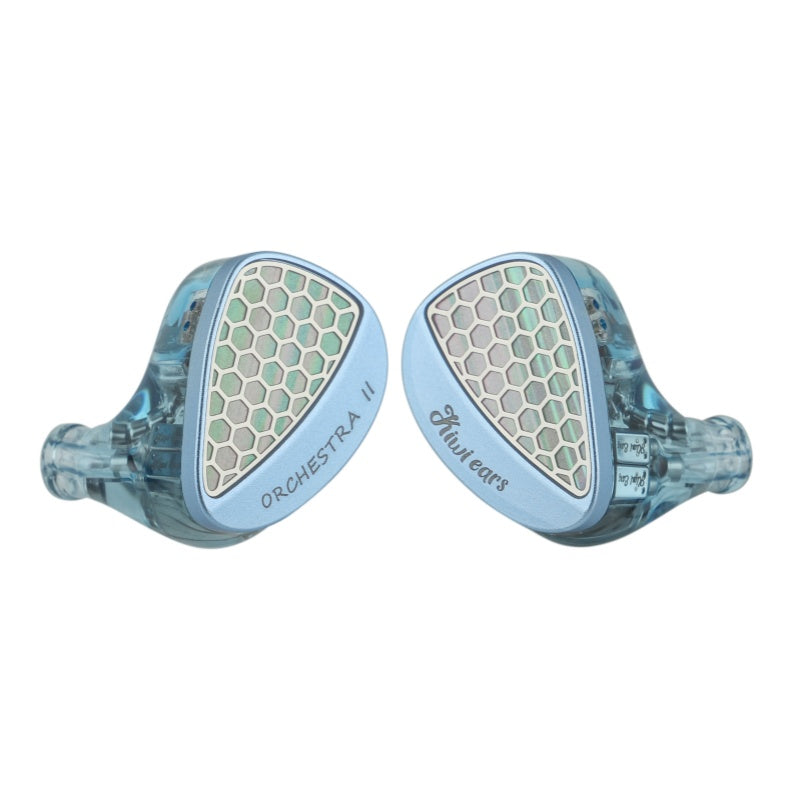
The Orchestra II takes a different approach from the Astral. Instead of combining dynamic and balanced-armature drivers, it uses 10 custom balanced-armature drivers per ear and a four-way crossover.
Kiwi Ears currently lists the Orchestra II at $349. The product also includes a detachable 0.78mm 2-pin cable with 3.5mm and 4.4mm plug options.
The transparent acrylic housing and multiple ear-tip options are designed around both fit and isolation. Kiwi Ears also offers custom-design options for the Orchestra II, giving buyers more flexibility than a conventional universal-fit IEM.
Beyond IEMs: DACs, AMPs and Accessories
One part of the Kiwi Ears catalog that is easy to overlook is everything around the IEM itself.
The company currently has a dedicated DAC/AMP category, as well as accessories. Its broader product catalog includes products such as the AD1 and AD1 Pro DAC/AMP devices, Allegro BAL, ear tips, cables and other accessories.
That matters because the buying journey does not always end with the IEM. A listener using a phone without a traditional headphone jack may need a USB-C DAC/AMP, while someone changing between different sources may benefit from a more flexible cable or connector setup.
For someone building a complete wired audio setup, it can therefore make sense to look at Kiwi Ears as an ecosystem rather than judging the company from one IEM alone.
What Actually Matters When Choosing a Kiwi Ears IEM?
1. Start With Your Budget
Kiwi Ears has enough models that your budget should be the first filter.
If you are comfortable spending around $50, there is little reason to begin by comparing $300-plus models. Start with the part of the catalog that fits your budget, then compare the technologies available at that level.
2. Think About Your Preferred Sound
Different listeners want different things from an IEM. Some prefer stronger bass, others prioritize vocals, detail, treble smoothness or a more reference-oriented presentation.
That is why driver count should not be treated as a substitute for listening preference.
3. Pay Attention to Fit
An IEM needs to sit securely in the ear and create a reliable seal. A poor fit can affect both comfort and the way bass is perceived.
Look at the shell shape and supplied ear-tip options before ordering, especially if you have struggled with in-ear headphones in the past.
4. Check the Connection
Many Kiwi Ears IEMs use detachable 0.78mm 2-pin cables, but the plug and cable options vary between models.
Check whether you need 3.5mm, 4.4mm or USB-C connectivity before purchasing.
5. Consider Your Source
A good IEM still needs to work with your phone, computer, DAC, audio interface or other source. Check impedance, sensitivity and connector requirements against your existing equipment.
Kiwi Ears: Pros and Cons
Pros
- Broad IEM lineup covering multiple technologies
- Products available across substantially different budgets
- Dynamic, balanced-armature, hybrid and planar approaches
- Detachable cables on many models
- Dedicated DAC/AMP and accessory categories
- Options for both universal-fit and more customized listening setups
Cons
- The large catalog can be confusing for first-time buyers
- Driver count does not automatically indicate which model will sound best to you
- IEM fit is highly personal
- International buyers should account for shipping times and possible import costs
- Opened returns can be subject to a 35% restocking fee under the published policy
Who Should Consider Kiwi Ears?
Kiwi Ears is particularly relevant if you want to explore wired IEMs rather than simply buy a mainstream wireless earbud.
- Music listeners who prefer wired audio
- People interested in different IEM driver technologies
- Musicians and performers looking for in-ear monitoring options
- Gamers who prefer a wired in-ear setup
- Audiophiles and enthusiasts who want to explore higher-end IEMs
- Buyers who may eventually want a DAC/AMP or other wired-audio accessories
Who May Want Something Else?
Kiwi Ears is less relevant if your main priority is wireless convenience.
Features such as active noise cancellation, Bluetooth multipoint, a charging case and automatic device switching are central to the modern wireless-earbud experience, not to a traditional passive wired IEM.
It may also not be the right direction for someone who dislikes the sensation of in-ear headphones or does not want to spend time finding the right ear-tip fit.
Which Kiwi Ears Direction Fits You?
| If you want… | Start by looking at… | Why |
|---|---|---|
| An affordable introduction to Kiwi Ears | Cadenza II | $49.99 single dynamic-driver design with KARS 2.0 |
| A hybrid driver setup | Stardust or Astral | Both use multiple driver technologies, with Astral positioned considerably higher in the range |
| A 10-driver balanced-armature design | Orchestra II | 10 BA drivers per ear and four-way crossover |
| A specialized multi-driver design | Septet or Étude | Different approaches to multi-driver and specialized IEM technology |
| A complete wired audio setup | DAC/AMP and accessories | Useful when your source device or existing setup needs a digital interface, amplification or compatible accessories |
This is a decision guide rather than a ranking. The right direction depends on your budget, preferred sound, fit, source device and intended use.
Warranty, Returns and Shipping
| Policy | What buyers should know |
|---|---|
| Warranty | Qualifying IEMs and earphones receive 1 year of warranty coverage; cables and adapters generally receive 3 months |
| Sealed returns | Eligible factory-sealed products can be returned within the published 30-day period, with the customer responsible for return shipping |
| Opened returns | Opened products returned within 7 days can be subject to a 35% restocking fee |
| Customized products | Customized products are excluded from normal returns under the published policy |
| Standard shipping | Free standard shipping is available to most countries |
| Express shipping | Available to many destinations, with cost depending on destination |
| Import charges | Applicable customs, import taxes and processing charges are the customer’s responsibility |
Important: The return policy deserves attention before opening an IEM. The published terms distinguish between sealed and opened products, and opened returns can incur a significant restocking fee.
Shipping for International Buyers
Kiwi Ears states that in-stock orders are generally shipped within three working days. Standard shipping is normally estimated at around two to four weeks after dispatch, while express shipping is generally estimated at around three to seven days after dispatch.
Actual delivery can vary because customs and local processing are outside the seller’s direct control. Buyers outside the seller’s home market should also check whether their country may impose additional import charges.
Frequently Asked Questions
Is Kiwi Ears a good IEM brand?
Kiwi Ears is a specialist audio brand with a broad range of IEM technologies and price levels. The important question is which specific model matches your preferred sound, fit, budget and source device.
What is the cheapest current Kiwi Ears IEM?
The current catalog includes products below $50, with the Cadenza II listed at $49.99. Other products and collaborations can have different pricing, so check the current store before purchasing.
Is Kiwi Ears good for gaming?
Some Kiwi Ears IEMs can be used for gaming, particularly if you prefer a wired connection and in-ear design. The best choice depends on fit and the type of sound presentation you prefer.
Does Kiwi Ears make products besides IEMs?
Yes. The current store includes DAC/AMP products and accessories in addition to its IEM categories.
Does Kiwi Ears offer a warranty?
Yes. Kiwi Ears states that qualifying IEMs and earphones receive one year of warranty coverage, while cables and adapters generally receive three months.
Can I return an opened Kiwi Ears IEM?
The published policy allows certain opened products to be returned within seven days, but a 35% restocking fee can apply. Customized products and certain accessories have different restrictions.
Final Verdict
Kiwi Ears is more interesting than a simple “IEM brand” label suggests. Its current store covers several driver technologies, multiple price levels and products that extend into DAC/AMPs and accessories.
For a newcomer, the Cadenza II provides a relatively accessible starting point at $49.99. For buyers who are specifically interested in hybrid designs, models such as Stardust and Astral provide a different route, while the Orchestra II moves into a 10-balanced-armature design at $349.
The biggest lesson from the current lineup is that there is no need to choose an IEM simply because it has more drivers or a higher price. The more useful question is what you actually want from the listening experience.
Start with your budget, then consider tuning, fit, connection and source equipment. Once those factors are clear, the Kiwi Ears catalog becomes much easier to navigate.
Before purchasing, check the current product page for the latest price, stock status, configuration, shipping estimate and return terms.